Nokia and the turnaround story named Lumia

The legendary Nokia 1110/1110i, the highest sold mobile device of all time

Those of you who, like me, were using a cell phone in the early 2000’s, must have heard of Nokia. It was the undisputed number one brand for mobile device manufacturing. A decade later, when our world is filled with smartphones and iPad-type of tablets, Nokia seems to have vanished from the phone stores, especially in the US. Well, the company’s stock price has plunged just about as fast: it lost 90% of value in the last 5 years following the launch of the legendary Apple iPhone. So what has been going on with Nokia? Does their stock make for a good investment at this moment? My answer is yes. Continue reading Nokia and the turnaround story named Lumia
The ideal number of credit cards: why/when more is better

When I started my credit journey in January 2012, all I wanted at the time was the first card, and I stayed with one card for the next 9 months until I learned that there were better cards in the market. For the next 3 months I went on an app spree and finally came to the point where I felt adding another card to my portfolio wouldn’t do me much good any more.

Apparently the number of credit cards I have is absurdly high to many people. The common perception is that more credit cards suggest more financial trouble. Knowing that a high percentage of the population tend to abuse credit and get themselves into a debt spiral, I totally understand how this perception was created.

Needless to say, if you have had credit before and found yourself often charging credit cards up to the maximum allowed and not paying the balance in full, 1 credit card is enough. You still need a credit card to maintain your credit history, but for that purpose one card can be sufficient if you do not abuse it. On the other hand, if you are able to handle credit well, never charge to the limit, and always pay statement balances in full, then you should have multiple credit cards. If you want to know the reason, please read on.

Continue reading The ideal number of credit cards: why/when more is better

Investment basics: what is a stock?

I thought it was funny how you can partially own a company without possessing any material part. Like, I own Apple stock, but I don’t even own the company’s stapler or toilet paper, much less one of their popular iPads or Macbooks. Holding a stock doesn’t mean I’m entitled to anything valuable necessarily. It’s an interesting concept. Continue reading Investment basics: what is a stock?

The must-know graph for credit scores

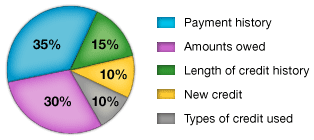
The chart from FICO, the company that provides the most widely used credit scores, says it all:

ce_scorebreakdown

That is it, folks. To achieve a high FICO credit score, we only need to improve these 5 components. In order of importance, here are the 5 things we should do to increase our FICO scores:

Continue reading The must-know graph for credit scores

Why is your credit card bill so huge: how credit card interest is calculated and what grace period means

I personally don’t carry a credit card balance unless my credit card is offering a 0% APR promotion because one of my goals in the credit quest is to build a perfect credit history without paying a penny in interest. But from my observation, I’m not the norm. Many people I know carry balances from time to time, and when they come to me for advice, I always tell them to at least pay the minimum to avoid late payment fees, and over time I have helped them save quite a bit of money from that.

Honestly though, paying just the minimum amount is never going to pull you out of debt since credit card interest accumulates everyday at an absurdly high rate. There are many reasons to underestimate interest charges.
Continue reading Why is your credit card bill so huge: how credit card interest is calculated and what grace period means

Today’s feature: “Get a Financial Life: Personal Finance in Your Twenties and Thirties” book review.

Get a Financial Life
Get A Life. Get a Financial Life.

The other day a friend of mine asked me for recommendation for a personal finance book. I recall plowing the “Personal Finance” shelves in the Barnes&Noble bookstore one day to find myself a good read. What I was looking for is a comprehensive guide that is concise and well-presented, sort of like a travel guide and unlike an actuarial exam study manual. Then I came across this book whose title says “Personal Finance in Your Twenties and Thirties.” Perfect! Their target audience includes me – that’s a good start. And that’s just the start. What else does the book have?

Continue reading Today’s feature: “Get a Financial Life: Personal Finance in Your Twenties and Thirties” book review.

Today’s feature: Bank of America BankAmericard secured credit card review

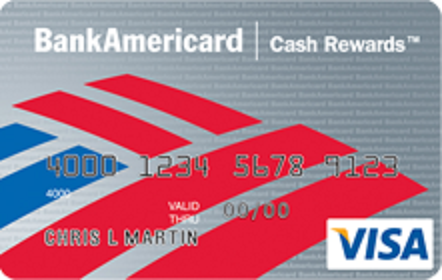
In the credit card universe, Bank of America is perhaps the most underrated. Despite being the 3rd largest credit card issuer in the United States of America, and bearing a really cool name, they are not often known for generous credit card offers. I wish they did a better job promoting their products since some are quite exceptional. One such an example is the BankAmericard Cash Rewards secured credit card.

A real credit card should not have the word "Debit".
It doesn’t say “secured”, but it is a secured card.

Continue reading Today’s feature: Bank of America BankAmericard secured credit card review

The impact of the American Airlines – US Airways merger on American Airlines AAMRQ stock: a curious case of stock piggy-backing

So I have been investing in stocks for 3 months now. My portfolio is in good shape; I lost a bunch of money from some bad trades, and gained a bunch from the good ones. Overall, I have come out ahead and learned a good deal about the stock market. Funny enough, most of my gains have been huge gains (think 20% or more) and come from incredible trades. One such a good trade gave me more than 50% return and really boosted my confidence for investing. And I have American Airlines and US Airways to thank for that. Specifically, I have the merger deal between them to thank for the gains from American Airlines stock. At this point I have already sold my entire position in the stock, and little did I know at the time that the movement of the stock was such a unique case in the world of investing.

Continue reading The impact of the American Airlines – US Airways merger on American Airlines AAMRQ stock: a curious case of stock piggy-backing

Career is the most critical aspect of personal finance

10-Key-Steps-to-a-Successful-Job-Search1

Recently, I’ve revisited my financial decisions since I graduated from college in the fall of 2011. You know what I found? Having a permanent, decent-paying job actually contributes the most to my assets and financial future. With money in my bank accounts and a stable income stream, I have been approved for good credit cards to build my credit history. The money I’ve saved has been put into my brokerage account so that I can learn how to invest. I’m 24, and I know there are a lot of things to be learned and a lot of money to be earned in the future, but I think I have a decent start, to which my income contributed significantly.

Continue reading Career is the most critical aspect of personal finance

Can international (F-1) students / non-resident aliens (H-1B visa holders) apply for credit cards?

Yay! I'm an alien!!!
Yay! I’m an alien!!! Cool, huh?

Absolutely! I applied for my Bank of America BankAmericard secured credit card as an H-1B visa holders, and I wish I had obtained my first credit card when I was an international student at Colgate. By the way, to my American readers who may not be well-versed about immigration stati, any foreign citizen that is living in the US is classified by the IRS as an alien. Those like me that don’t have permanent residency either are called non-resident aliens. Someone from the IRS has a good sense of humor.

I know that I asked myself this question at some point while being a college student, and so did many of my friends who were international students. So for the future generations of international students, let’s settle this once and for all. The answer is, again: Yes you can! Continue reading Can international (F-1) students / non-resident aliens (H-1B visa holders) apply for credit cards?